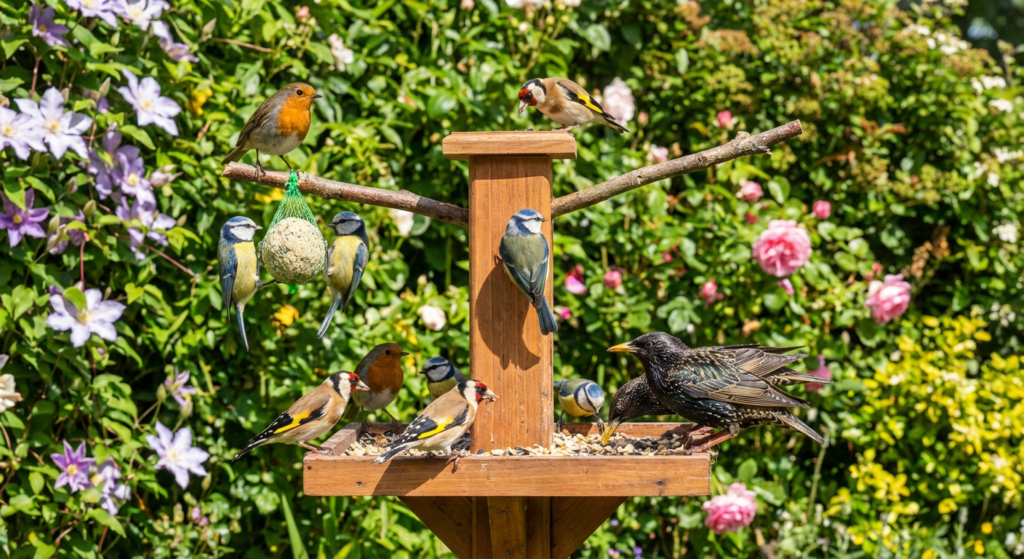
Bird feeders across the United Kingdom attract a vibrant array of garden birds, offering a front-row seat to nature’s daily spectacle. Whether you’re a seasoned birdwatcher or a curious gardener, knowing which species visit your feeder can deepen your appreciation and help you create a more inviting haven for wildlife. This step-by-step playbook will guide you through identifying, attracting, and enjoying the most common birds that frequent UK gardens.
The most common garden birds you may see at feeders
The UK’s garden bird feeders attract a wonderful variety of species throughout the year, each with their own feeding preferences and behaviours. Understanding which birds are most likely to visit your feeders helps you prepare the right food and create an welcoming environment for these delightful visitors.
Among the most frequent feeder visitors, you’ll likely encounter the cheerful robin with its distinctive red breast, often seen hopping confidently around ground-level feeding areas. Blue tits are equally common, their acrobatic feeding style allowing them to hang upside down from feeders while accessing seeds and nuts. Great tits, larger than their blue cousins, prefer sunflower seeds and can often be seen dominating feeders with their bold personalities. The striking goldfinch, with its bright red face and yellow wing patches, shows a particular fondness for nyjer seeds and will often visit in small flocks, creating a delightful spectacle of colour and movement.
Blackbirds frequently appear beneath feeders, preferring to forage on the ground for scattered seeds, mealworms, and fruit. The house sparrow, though less common than in previous decades, still visits many garden feeders in small groups, chattering noisily as they feed on mixed seeds. Greenfinches, with their olive-green plumage and thick beaks, are excellent at cracking sunflower seeds, while the tiny wren occasionally darts in for insects and small seeds, though it’s more commonly seen hunting in undergrowth.
Seasonal variations bring additional excitement to feeder watching. During autumn and winter months, you might spot siskins feeding alongside goldfinches on nyjer seeds, or catch a glimpse of a redpoll with its distinctive red cap. Coal tits, smaller than great tits but equally agile, often cache seeds for later consumption, taking one seed at a time before flying off to hide it. Nuthatches, if you’re fortunate enough to have mature trees nearby, may visit for nuts and suet, using their strong beaks to wedge food into bark crevices.
The key to attracting this diverse range of species lies in offering variety in both food types and feeder styles. Different birds have evolved different feeding strategies – some prefer to cling to hanging feeders, others forage on flat surfaces, and many are ground feeders by nature. By providing multiple feeding opportunities at various heights and locations in your garden, you’ll maximise your chances of attracting the full spectrum of common British garden birds to observe and enjoy.
Robins, tits, sparrows and finches: what to look for
Before you can enjoy a bustling Bird feeder camera setup guide feeder, it’s essential to prepare your garden and gather the right resources. Start by researching which bird species are most common in your region of the UK. Resources like the RSPB’s bird identifier and local birdwatching groups can provide valuable insights into seasonal visitors and feeding preferences. Understanding the habits of species such as house sparrows, starlings, and great tits will help you tailor your feeder setup for maximum appeal.
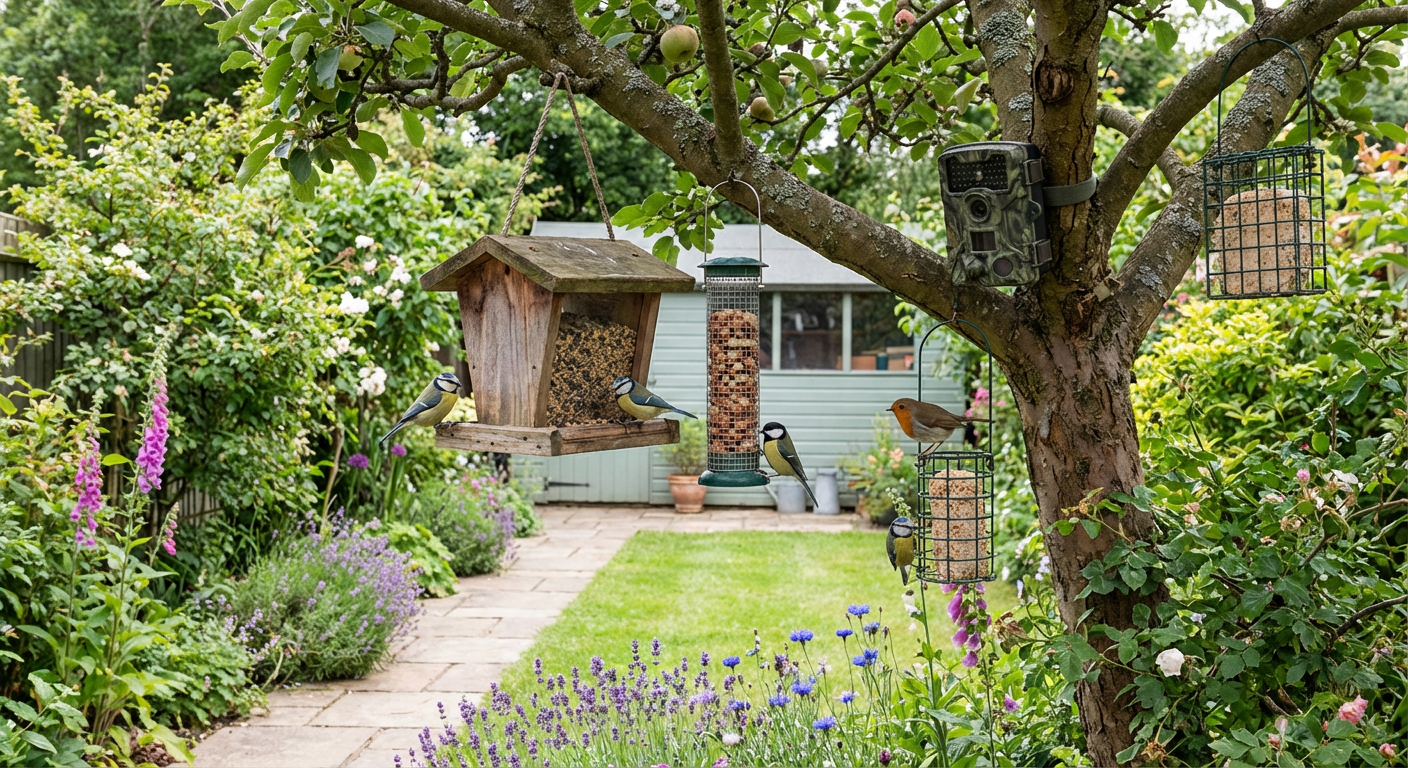
Gathering the right equipment is equally important. Invest in a variety of feeders—such as seed, suet, and peanut feeders—to cater to different species. Stock up on high-quality bird food, including sunflower hearts, fat balls, and mealworms, which are favourites among many UK garden birds. Consider adding a bird feeder with a camera to capture close-up footage, making identification and monitoring even easier.
When observing robins at your feeders, look for their distinctive red breast and confident, ground-hopping behaviour. These territorial birds often prefer mealworms and will frequently chase away competitors, sometimes engaging in dramatic aerial disputes. Robins are particularly active during dawn and dusk, and you’ll notice they have a habit of tilting their heads to one side when listening for ground-dwelling insects. Their tameness around humans makes them excellent subjects for close observation and photography.
Tits, including blue tits, great tits, and coal tits, are acrobatic feeders that excel at clinging to hanging feeders in seemingly impossible positions. Blue tits display vibrant blue caps and wings with bright yellow chests, and can often be seen hanging upside down while feeding. Great tits are the largest of the tit family, easily recognisable by their distinctive black heads, white cheeks, and bold yellow bodies with a prominent black stripe down the centre. Coal tits, though smaller, sport distinctive white patches on the back of their black heads and prefer to cache food, often taking seeds away to hide them for later consumption. All tit species particularly enjoy sunflower hearts and fat balls, and their energetic feeding behaviour makes them entertaining to watch.
House sparrows typically arrive in chattering flocks, creating a lively atmosphere at your feeders. Males display grey caps and distinctive black bibs that become more pronounced during breeding season, while females show more subdued brown and buff plumage with subtle streaking. These highly social birds demonstrate fascinating pecking order behaviours, with dominant individuals feeding first while others wait their turn. They prefer mixed seeds and will often feed together at platform feeders, ground feeding areas, or large tube feeders with multiple perches.
Finches bring remarkable colour and variety to garden feeders, with each species showing distinct preferences and behaviours. Goldfinches are perhaps the most striking, sporting bright red faces, white cheeks, and brilliant yellow wing bars that flash as they fly. They’re specialist seed-eaters with pointed beaks perfectly adapted for extracting seeds from thistles and teasels, making them particularly fond of nyjer seeds. Greenfinches are stockier birds showing olive-green plumage with bright yellow flashes on their wings and tail, and their powerful beaks allow them to tackle larger seeds that smaller finches cannot manage. Siskins, though less common, may also visit feeders, especially during winter months—these small, streaky birds show yellow-green plumage and have a particular fondness for hanging upside down while feeding, similar to tits.
Understanding the subtle differences in feeding behaviours can greatly enhance your birdwatching experience. For instance, while goldfinches often feed in small, acrobatic flocks that chatter constantly, greenfinches tend to be more methodical and will dominate feeders when present. Watch for the way different species grip perches—finches use their feet to steady themselves while their beaks do the work, whereas tits use their strong feet as primary anchors, allowing for their impressive acrobatic displays.
Common blockers at this stage include poor feeder placement, lack of food variety, or insufficient shelter. Birds are more likely to visit feeders that are positioned near shrubs or trees, offering cover from predators while remaining visible from your viewing point. The ideal distance is 2-3 metres from natural cover, allowing birds to dart to safety when needed. Consider creating a layered garden environment with tall trees, medium shrubs, and ground cover to accommodate the different comfort zones of various species—robins prefer lower perches and ground access, while finches are comfortable feeding at height.
Regular cleaning and maintenance of feeders prevent disease and ensure a safe environment—aim to clean feeders weekly with a mild disinfectant solution, paying particular attention to removing old, wet seed that can harbour harmful bacteria. During wet weather, check feeders more frequently as damp conditions can cause seed to spoil rapidly. Position feeders where they’ll receive some morning sun to help dry off overnight moisture, but ensure they also have shade during the hottest parts of summer days.
Timing also plays a crucial role in successful bird watching, with different species showing distinct daily rhythms. Early morning (just after dawn) and late afternoon (before dusk) are peak feeding times, particularly during autumn and winter when natural food sources become scarce. However, robins often feed throughout the day, while finches may have specific mid-morning and early afternoon peaks. Keep a feeding schedule consistent, as birds quickly learn when fresh food appears and will time their visits accordingly. By addressing these potential obstacles early and maintaining patience—it can take several weeks for birds to discover and trust new feeders—you set the stage for a thriving, bird-friendly garden that will provide year-round entertainment and wildlife observation opportunities.
Best bird feeders for UK gardens
Which birds prefer seeds, peanuts or suet?
Understanding which birds prefer specific food types is crucial for creating an effective feeding station that attracts a diverse range of species. Different birds have evolved distinct feeding preferences based on their beak shape, size, and natural foraging behaviours, making food selection one of the most important factors in successful bird feeding.
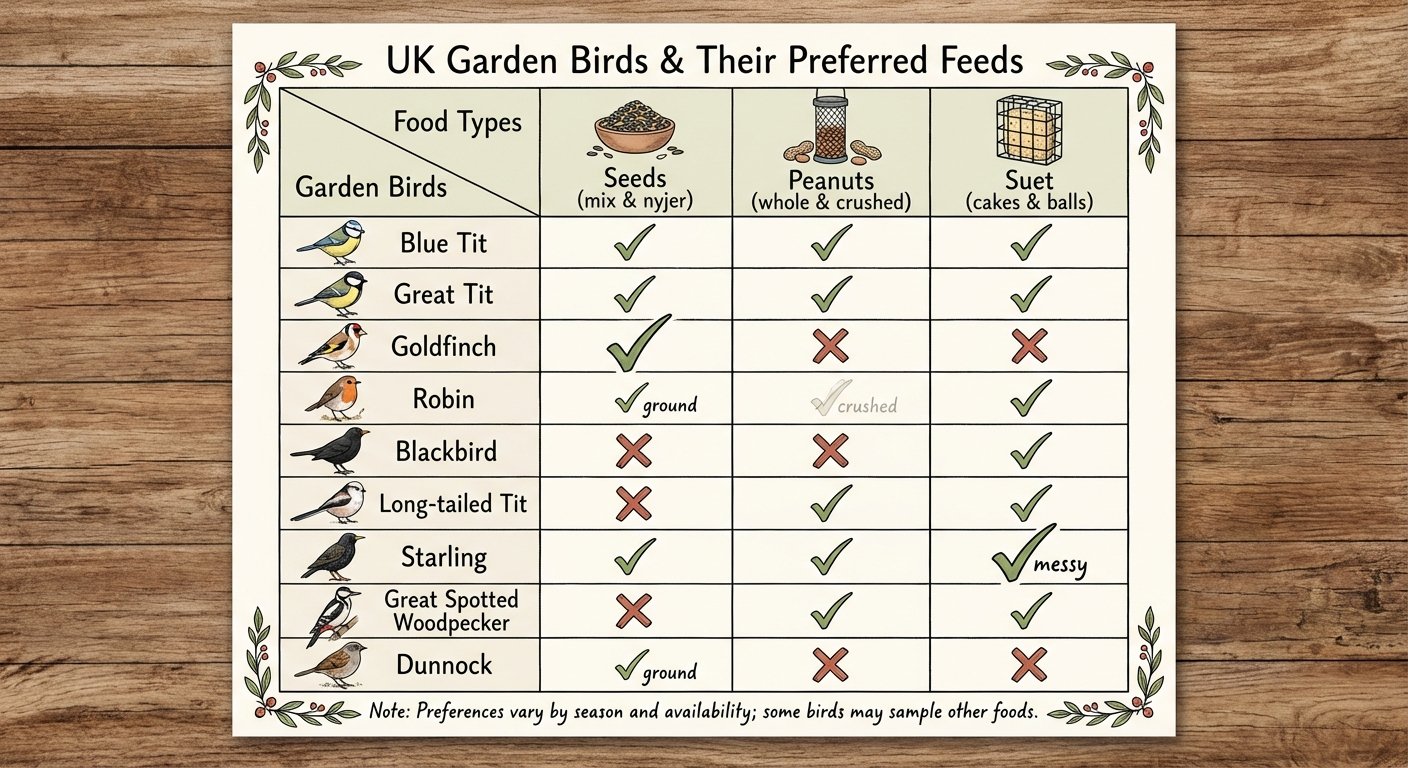
Seed-loving species form the backbone of most garden bird communities. Sunflower hearts are particularly popular with blue tits, great tits, coal tits, and greenfinches, while nyjer seed specifically attracts goldfinches and siskins with its high oil content. House sparrows and tree sparrows readily consume mixed seed blends, and robins will pick at smaller seeds scattered on the ground. Bullfinches sHow to clean your bird feeder a preference for larger seeds, while chaffinches and linnets enjoy a variety of seed types presented in different ways.
Peanut enthusiasts include many of the same tit species, but also attract larger birds like great spotted woodpeckers, nuthatches, and jays. Whole peanuts should be offered in mesh feeders to prevent choking, while crushed peanuts can be scattered on tables or mixed with other foods. Starlings are particularly fond of peanuts and will often dominate feeders, so consider using weight-activated feeders to give smaller birds a chance.
Suet-based foods are especially valuable during colder months when birds need high-energy nutrition. Woodpeckers of all sizes gravitate toward suet balls and fat cakes, while wrens, treecreepers, and nuthatches also benefit from these calorie-rich offerings. Many insect-eating birds, including robins and blackbirds, will consume suet mixed with dried insects or mealworms, making it an excellent way to support species that might otherwise struggle to find adequate winter nutrition.
To maximise your garden’s appeal, offer multiple food types simultaneously and observe which disappear fastest. Create feeding zones with seed feeders in one area, peanut feeders in another, and suet offerings near trees where woodpeckers feel secure. This approach not only reduces competition between species but also allows you to cater to the specific preferences of different bird families, ultimately attracting a more diverse and interesting array of visitors to your garden throughout the year.
Consider seasonal variations in preferences as well—while seeds remain popular year-round, suet becomes increasingly important from autumn through early spring when natural insect food is scarce. During breeding season (typically April to July), protein-rich foods like mealworms become especially valuable as parent birds seek nutritious options for their growing chicks. By understanding and adapting to these changing needs, you’ll maintain consistent bird activity and support local populations through their annual lifecycle.
Which birds are shy and which are bold?
Understanding bird behavior patterns is crucial for creating an effective feeding strategy. Some species are naturally bold and will readily approach feeders even in busy gardens, while others are more cautious and require patience to attract. Bold birds like robins, blue tits, and house sparrows often dominate feeders and aren’t easily deterred by human activity or garden noise. These confident visitors will typically feed throughout the day and may even become quite tame, approaching when they see you filling feeders.
In contrast, shy species such as bullfinches, nuthatches, and long-tailed tits prefer quieter feeding opportunities and may only visit during early morning or late afternoon when gardens are less active. These timid birds often feed quickly and nervously, constantly checking for threats. Blackbirds and song thrushes fall somewhere in between – they’re regular visitors but prefer ground feeding away from the main hustle and bustle of hanging feeders. Understanding these behavioral differences helps explain why you might see some species regularly while others remain elusive despite being present in your area.
Once your feeders are attracting regular visitors, it’s time to review your results and optimize your setup. Start by analyzing your birdwatching log or app data to identify which species are most frequent and which are absent. If you notice a lack of diversity, experiment with new food types or feeder placements. For example, switching from mixed seed to sunflower hearts may attract more finches, while adding a ground feeder could entice dunnocks and wrens. Pay attention to feeding times too – shy species often prefer dawn and dusk feeding sessions when gardens are quieter.
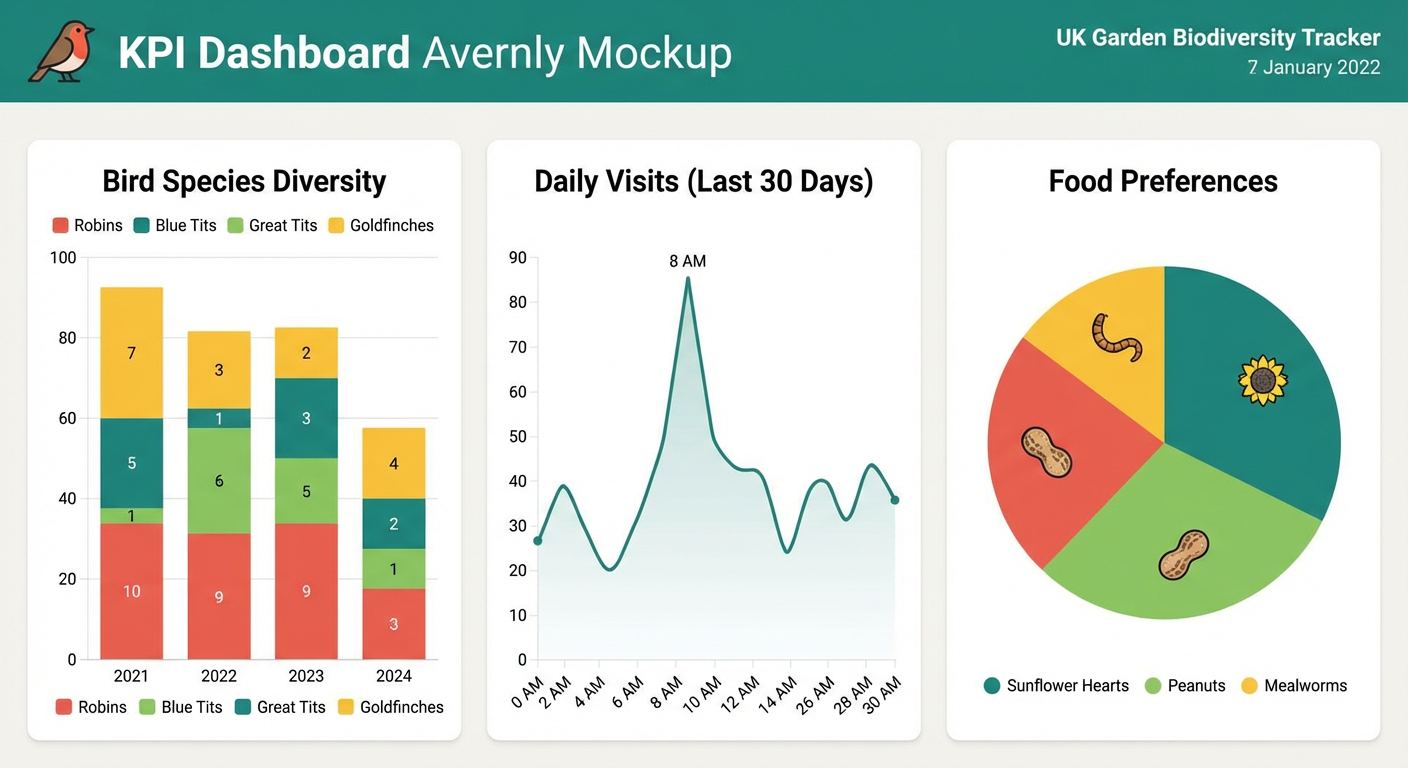
Consider creating a KPI dashboard to visualize your progress and track Seasonal bird feeding tips changes in bird behavior. Monitor metrics such as the number of species per month, average daily visits, peak feeding times, and changes after introducing new foods or feeders. This visual feedback loop helps you quickly spot what’s working and where there’s room for improvement. For instance, a spike in goldfinch sightings after adding nyjer seed is a clear indicator of success, while noting that certain species only visit at specific times can help you plan your birdwatching sessions more effectively.
To accommodate both bold and shy species, create feeding zones at different distances from your house. Place feeders for confident birds like blue tits and robins closer to windows where you can easily observe them, while positioning feeders for nervous species further away in quieter corners of your garden. Consider adding dense shrubs or small trees near distant feeders to provide quick escape routes for anxious birds. This multi-zone approach ensures all personality types feel comfortable visiting your garden.
Don’t be afraid to experiment with timing and presentation methods. Try rotating feeder locations seasonally, offering different foods during peak migration periods, or introducing specialized feeders like window feeders for close observation or camera-equipped models for remote monitoring. Solicit feedback from fellow birdwatchers or online forums to discover innovative approaches that have worked in similar garden settings. By iterating based on real-world results, seasonal patterns, and community insights, you’ll continually enhance your garden’s appeal to both bold and bashful visitors, ensuring a richer birdwatching experience year-round.
How a feeder camera helps with identification
A feeder camera revolutionises bird identification by capturing detailed footage that allows you to study species at your own pace. Unlike fleeting glimpses through a window, recorded footage lets you examine key identification features such as beak shape, wing markings, and behavioural patterns. This is particularly valuable for distinguishing between similar species like coal tits and marsh tits, or identifying juvenile birds that may look quite different from their adult counterparts.
Modern bird feeder cameras offer high-definition video quality and motion-activated recording, ensuring you never miss a visitor. Many models include night vision capabilities, revealing nocturnal visitors you might never have known were using your feeder. The timestamp feature helps you understand feeding patterns throughout the day, while some advanced cameras even use AI to automatically identify and categorise species for you.
Beyond identification, feeder cameras document fascinating behaviours that enhance your understanding of garden birds. You might capture footage of great tits demonstrating their acrobatic feeding techniques, or witness the complex social hierarchies as different species interact at your feeder. These recordings become invaluable for building a comprehensive species log and can help you identify the optimal times to position yourself for live birdwatching.
The educational value extends to sharing discoveries with local birdwatching communities or contributing to citizen science projects. Many wildlife organisations welcome feeder camera footage for research purposes, particularly for tracking population changes or unusual sightings. Some birdwatchers have even discovered rare vagrant species in their gardens through careful review of their camera footage, highlighting species they initially overlooked during real-time observation.
Frequently Asked Questions
Which bird species are most commonly seen at UK feeders?
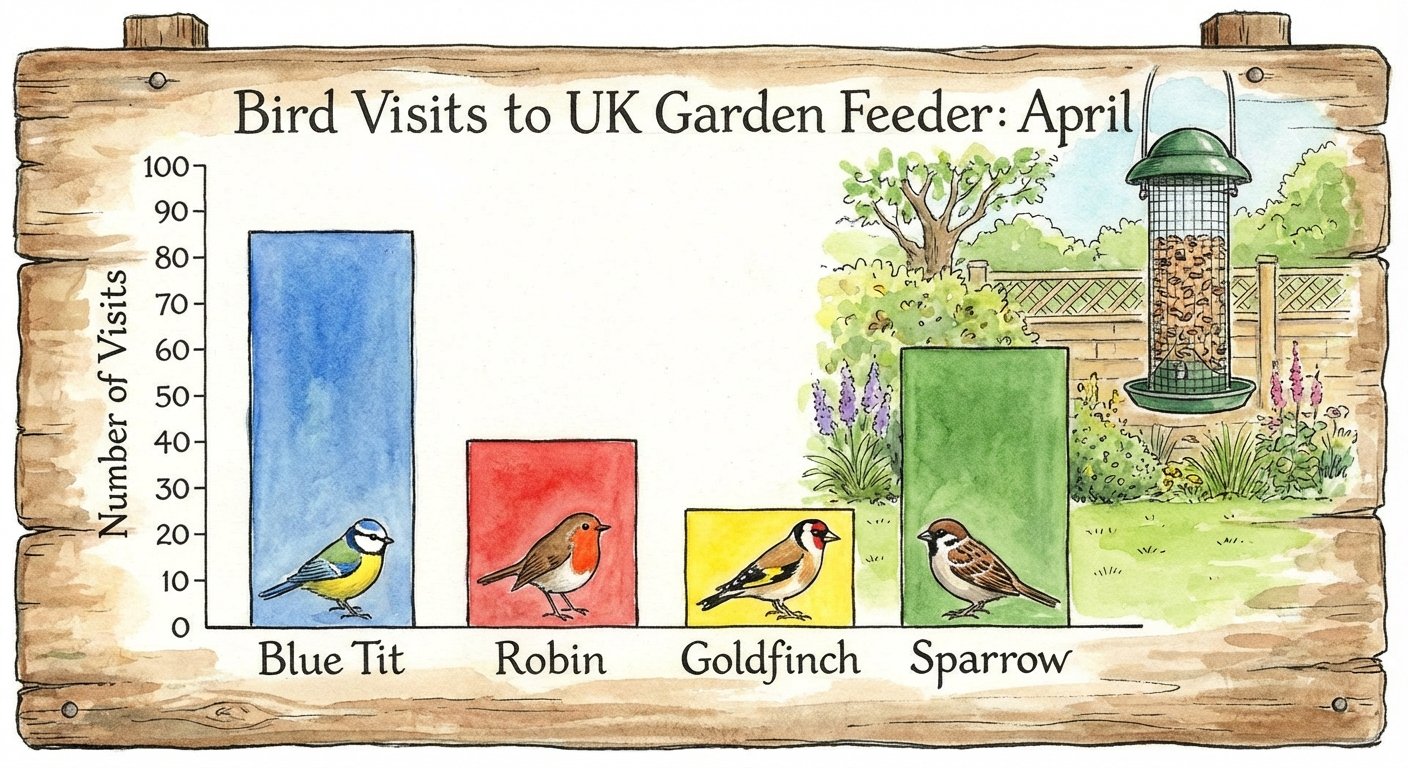
House sparrows, blue tits, robins, starlings, and goldfinches are among the most frequently spotted birds at UK feeders. Their presence can vary by region and season, but these species are reliable visitors in many gardens.
How can I attract more bird species to my garden feeder?
Offering a variety of foods—such as sunflower hearts, peanuts, nyjer seeds, and mealworms—can attract a broader range of species. Placing feeders near shrubs or trees for cover, keeping them clean, and providing fresh water will also encourage more birds to visit.
Is it safe to feed birds all year round in the UK?
Yes, feeding birds year-round is beneficial, especially during winter and breeding seasons when natural food sources may be scarce. Just ensure feeders are regularly cleaned to prevent the spread of disease.
What is the best way to identify birds visiting my feeder?
Using a bird identification guide or apps, observing key features like size, colour, and behaviour, and capturing photos or videos with a feeder camera are effective ways to identify visiting species.
Why are some birds not visiting my feeder?
Birds may avoid feeders due to unsuitable food, poor placement, lack of cover, or the presence of predators. Try adjusting your setup, offering different foods, and ensuring the feeder is in a safe, sheltered location.
By following this structured playbook, you can transform your UK garden into a lively hub for a diverse range of bird species. Setting clear goals, preparing thoughtfully, executing proven steps, and optimizing based on real results will ensure your birdwatching journey is both rewarding and educational. Every new visitor to your feeder is a testament to your efforts and a step closer to a thriving, wildlife-friendly garden.